Experience Yourself
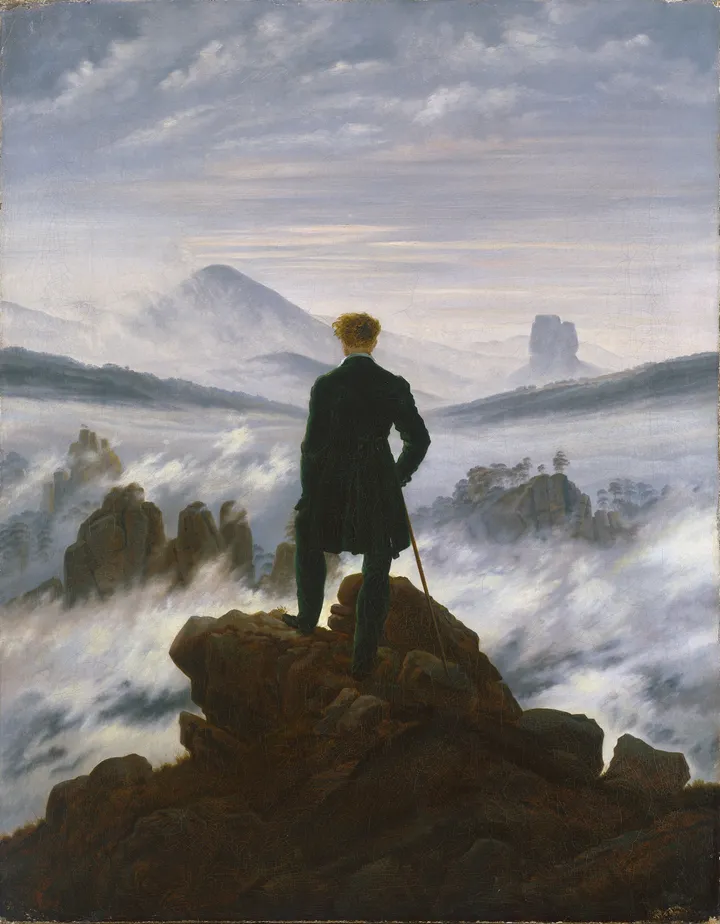
French Philosopher Albert Camus famously wrote,
You will never be able to experience everything. So, please, do poetical justice to your soul and simply experience yourself.
This was from his personal notebooks, retrieved posthumously. However, based on the writing of his own experience reflected in his novel A Happy Death, written in 1938 but published posthumously as well, and I would gamble on the fact that this quote originated around the same time. Experience yourself one of the biggest ideas reflected in A Happy Death; as the main character Mersault rejects all relationships and material things to just live the final years of his life on the oceanside of France.
Published in 1971, 11 years after Albert Camus’s death, A Happy Death tells the story of a character named Mersault who commits a crime and lives free of guilt while finding happiness within himself. Though written before The Stranger, A Happy Death is often considered a precursor. However, it was written and left unfinished, abandoned while he moved on to begin writing in “cycles”, triptych sequences consisting of a novel, an essay, and a play. Reading A Happy Death is to experience firsthand what a prototype for one of the most groundbreaking philosophies, while blurring the intimate lines between Camus’ own life and the fiction of his protagonist.
Camus’ writing maintains a sense of introspection and shoegaze in a way that is unlike any other author I have read, and the quotes included have been scattered across sticky notes and journals alike for reflection
In Part One (Natural Death), the first chapter begins with the crime, and traverses back a few weeks or months (a technique named in media res from the Latin, and seen famously in literature Tartt’s A Secret History or films like Nolan’s The Prestige). He meets with his friend Zagreus, a wealthy friend but a cripple. He proceeds to shoot his friend, stage it like a self-inflicted death, and move swiftly on, going to take a nap for the rest of the day. He is to inherit the rest of Zagreus’ money. The rest of Natural Death backtracks a bit to outline Mersault’s day job as a shipping clerk in a monotonous but seaside office.
A craving for freedom and independence is generated in a man still living on hope. [25]
He has a lover, Marthe, who was one of his erratic and unfaithful partners, likely modeled after one of Camus’s own. At one calamitous point of one chapter, Marthe learns that she is easily able to make Mersault jealous of her former lovers. This occurs when she has an interaction with one such lover in a theatre he had been accompanying her to. Eventually, it is revealed that a man named Zagreus was her first lover turned intellectual companion. He becomes annoyed at their persistent relationship, and becomes avoidant within his own. He goes to meet Roland Zagreus, an amputee who believes money buys time, and time is of direct relation to happiness. Accepting that his wealth is wasted, he orchestrates a plan for his own murder, allowing Mersault to escape financial burden in a search for existential meaning and true happiness.
This part acts as a catalyst for the protagonist and leads into the events of the second part. In Part Two: Conscious Death, our character avoids a slow costly life by opting to rid himself of all material things, and simply experience himself. He secured financial freedom to travel Europe and experience the beauty found in the women in Prague, Breslau, Vienna, and Genoa. Expectant to find his true happiness while living nomadically, he instead feels alienated, isolated, and ill.
He was flooded by a dreadful pleasure at the prospect of so much desolation and solitude. To be so far away from everything, even from his fever, to suffer so distinctly here what was absurd and miserable in even the tidiest of lives showed him the shameful and secret countenance of a kind of freedom born in the suspect, the shady. [59]
Even surrounded by the beauty that is Europe, he was unhappy at its devolution from a landscape of beauty and nature to the bustling townships that surrounded him. He lacked the connectivity privy to all of human existence:
The rushing river with its burdens of shouts and tunes, the fragrance of gardens, full of the coppery glow of the setting sun and the twisted, grotesque shadows of the statues on the Charles Bridge made Mersault barely conscious of his desolation: a solitude in which love had no part coming to a standstill as the fragrance of leaves and water reached him, he felt a catch in his throat and imagine tears which did not come tears to be for a friend or for open arms. But tears gave away to the world without tenderness in which he was immersed. [68]
He proceeds to move in with three younger women in an attempt to find an atmosphere joined in social acceptance and greater happiness. The move on to a group house, one referred to as The House Above The World. This is where Camus concepts begin to feel disjointed. He never fully explains what it is to the readers or how it integrates with the absurdity of existence. However, we do know from context that it was a sort-of purgatory transition state for Mersault (and likely Camus himself) from his travels to his absolute isolation.
In the sky, night showed them its shining face”, radiant and secret. The lights passed far below in the harbor, and the screech of trains occasionally reached them. The stars swelled, then shrank, vanished and were reborn, drawing evanescent figures, creating new ones moment by moment. In the silence, the night recovered its density, its flesh. Filled with twinkling stars, it left in their eyes the play of lights that tears can bring. And each of them, plunging into the depths of the sky, found that extreme point where everything coincides, the secret and tender meditation, which makes up the solitude of one’s life. [101]
These four individuals look down on the world, rejecting societal drama and acting as rebelling, detached observers of the world. Yet, he leaves due to its safety; Mersault must confront the uncertainty offered by the world. He opts in for a shoreside country villa.
Here, he has more connectivity to his neighbors and bustling township, but also a sense of independence and ability to be one with nature. He ends up marrying a woman, one of his affairs, not out of passion but out of a need for shared silence. Additionally, his health quickly declines, much like Camus’ own battle with Tuberculosis.
He goes on for many pages on our protagonist’s death, reflecting on his acceptance and lack of regrets in life. He treats his deterioration as the most natural thing to come, just as the tides wash over the sand. He remains completely conscious and lucid, willingly dissolving into the physical world. He dies with the absolute certainty that he successfully mastered his own existence.
Just as there is a moment when the artist must stop, when the sculpture must be left as it is, the painting untouched–just as a determination not to know, serves the maker more than all his resources of clairvoyant–there must be a minimum of ignorance, in order to perfect a life of happiness. Those who lack such a thing must be set about acquiring it: unintelligence must be earned. [121]
What I truly connected with was the ability for Camus to depict the few moments we often get lost in, unable to crawl back to reality for just a moment.
Sometimes he picked up his watch and stared as the minute hand shifted from one number to the next, marveling that five should seem so indeterminable. [120]
Mersault rejects the idea of laborious work, of a bustling life, and of trying to fight the void that is death as it approaches. He takes meaning in the aesthetic beauty around him, such as the women
Something inside him claimed for the gestures of women, for arms that open, and for warm lips. From the depth of painful nights in Prague, amid smells of vinegar and sentimental tunes, the anguished countenance of the old Baroque world which had accompanied his fever mounted toward him. Breathing with difficulty, seeing nothing, moving mechanically, he sat up on his bed… Tears burst from his eyes. Inside him widened a great lake of solitude and silence above which ran the sad song of deliverance. [70]
Mersault befriended the idea of solitude. Not solitude in the sense of Superman’s fortress or abandoning all connection, but the ability to sit with yourself, to understand the tears that don’t come, the moments that feel too large for our own existence. Those are the moments one must not avoid. He also begs for living intensely, with passion in the moments that can be harvested.
Leaving A Happy Death unpolished is ironic and quite fitting. The radical acceptance that comes not from understanding life, but from accepting that understanding may not come at all. Camus’ death fits the sort of irony; he died in a car crash when his friend veered off an icy road, dying instantly with no explanation. In his pocket was a train ticket: the car ride from his friend was a last-minute, inexplicable decision.